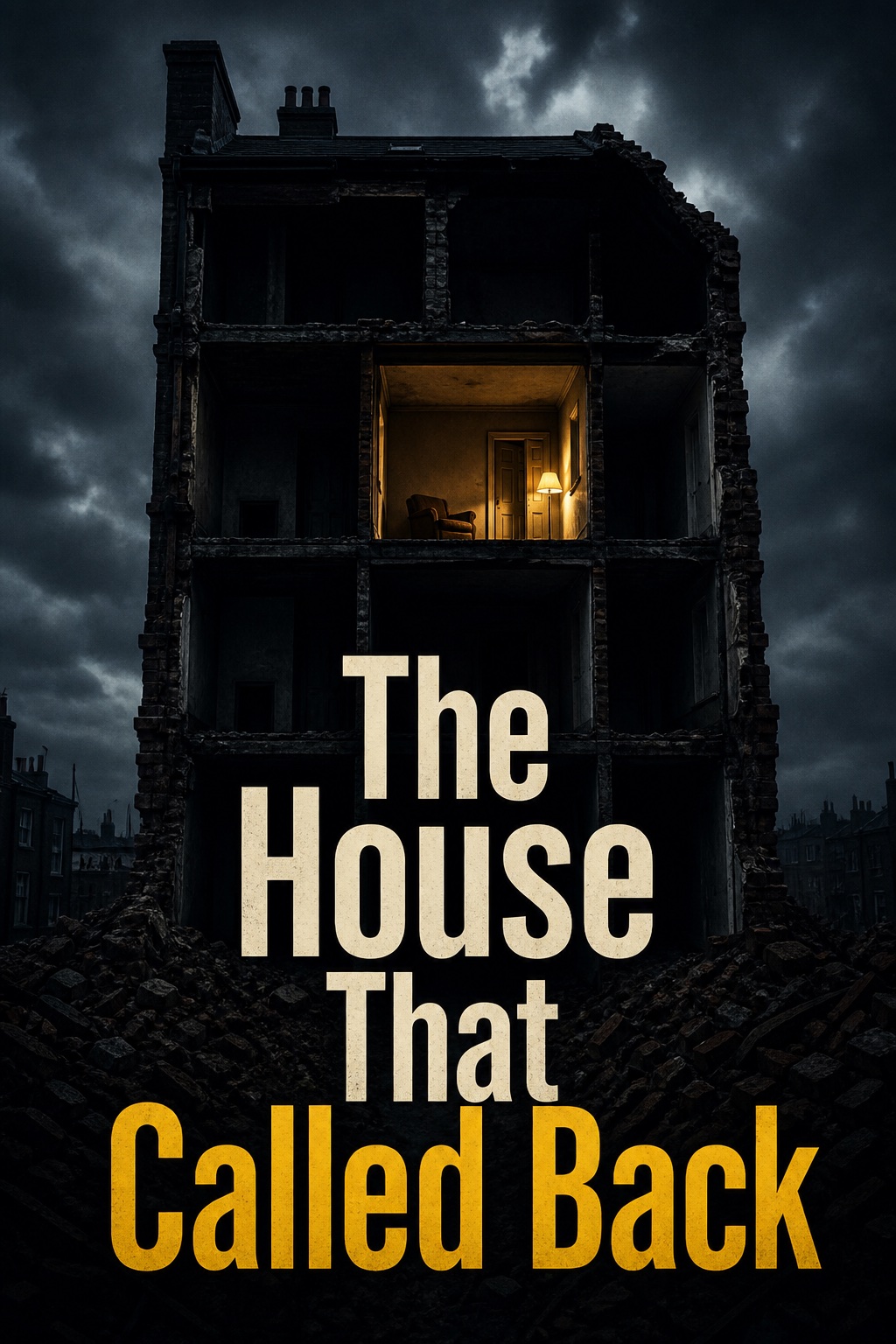
Cover of The House That Called Back

by Internovel Originals

The House That Called Back

Read full first chapter

No signup, no paywall · the full story continues in the app

40Public chapters
10 minFirst chapter
EnglishLanguage
Jun 29, 2026Last updated

The story

Clara Wyss answers a phone call from inside a house that was already demolished—then a voice on the line says her name like it remembers her. Clara and Otto Frame clash—she thinks he’s hiding the full truth, he insists he’s protecting her—until their trust becomes the only safe path through an expanding conspiracy. Grief weaponized into control: Clara turns helpless loss into a relentless, intimate investigation where every new clue feels like it was planted for her.

Chapter 1 · The Call After the Dust · 10 min read

The night air in Clara Wyss’s apartment smelled like dust and cold coffee. She sat at her kitchen table with a notebook open, her pen moving only when her eyes forced themselves to focus. On the page were dates and permit numbers, the kind that were supposed to make the past behave.

Her left hand rested on a thin folder of renovation notes. The right hand held her phone, screen bright, showing no missed calls, no new messages—nothing that should explain the vibration that started again, sharp and wrong, like a signal testing a device.

Clara stared at the phone as the ring tone filled the room. It was not a contact name. The caller ID line was blank, then it flashed one thing and vanished: a number that did not belong to any operator she knew.

She almost let it go to voicemail. Her throat tightened at the thought of hearing her husband’s death turned into another recorded official voice. But her fingers moved before her mind finished the argument.

She pressed answer. “Hello?”

Static rushed into her ear, loud enough that she pulled the phone back for half a second. Then the noise thinned, as if someone adjusted a dial.

A voice came through, careful and low. It did not sound like a stranger calling from a distance. It sounded like someone standing too close.

Her skin went cold. She knew that tone. Not the exact speaker, not the age of the voice. The rhythm. The way it landed on her name like it had been used before.

She swallowed hard. “Who is this?”

The line answered with another burst of static, then the same voice again. “You kept your notes.”

Clara’s pen stopped moving. Her apartment suddenly felt too small for her grief. “I’m not giving you anything.”

“You already gave it.” The voice grew firmer. “The house called back.”

Clara’s heart kicked once, hard. The demolished house was sealed. After Johannes’ death, the building had been taken down, paperwork sealed, access blocked. Officially, there was nothing left to call.

Still, her mind flashed to the last time she stood inside the real layout, the way the hallway bent wrong and the echoes came back late, like the building was holding its breath.

“Listen,” she said, forcing her voice to stay steady. “If you have a recording, if you’re pretending—”

The caller cut her off. “Hallway with the echo line.”

The phrase hit her like a match. She had written it once in her private renovation notes, a label she used because the official plan had been wrong. She had never shared that exact wording.

“That room doesn’t exist,” Clara whispered, even though she knew the caller could still hear her. Anger rose under the fear, hot and sharp. Grief had been helpless for months. This felt like control.

“It exists,” the voice said. “It was moved.”

Clara’s fingers tightened around the phone. “Moved where?”

Static swallowed the answer. Then the voice spoke again, faster, like it was reading a script it did not want to finish. “Don’t answer it again.”

Clara blinked. She had not said that line aloud. She had only felt it, the way you feel a warning before you understand the danger.

The call ended with a clean click. No goodbye. No silence long enough for her to breathe.

She sat still for one full minute, listening to the apartment settle back into normal sounds. Her hands shook when she grabbed her phone again, opening the recorder app she used for archive interviews.

Clara hit record. She needed proof that she wasn’t breaking down. She needed something that did not belong to her memory.

Her screen showed no call currently in progress. She stared at it anyway, then tapped the call log. The blank caller ID had left a trace, a time stamp, and a connection that looked real enough to hurt.

When her recording started, she heard only her own breathing and the faint hum of her fridge. She played it back once, then twice. It was empty. She had recorded nothing while the line was active.

Her phone buzzed again. A new text message slid onto the screen like a blade.

Clara’s chest tightened. Otto Frame never sent messages like that. He was the kind of man who spoke in careful pieces, who watched exits before he talked about feelings.

Her thumb hovered over the keyboard. She wrote nothing. She didn’t thank him. She didn’t ask how he knew.

Instead she opened her call audio settings and found the small toggle for “call recording,” the one she had turned off months ago after a legal warning. She turned it on now, fingers steady only because her anger had replaced panic.

Then she tested her phone with a short dial-out to her neighbor and played it back. The sound came through clear. If the call returned, she would catch it.

Clara looked at her notebook again. Her renovation notes were her only honest witness. She flipped to the page where she had drawn the hallway shape from memory, a line that the official layout replaced with a door that never existed.

She had used “echo line” there, because the sound in that hallway came back like a delayed warning. Hearing it from the caller felt like someone had reached into her private work and dragged the phrase into the dark.

The next buzz came from her own calendar app, not from a new call. Otto’s name was on the reminder she didn’t remember setting: “Meet, 9 p.m. Keep keys.”

Clara stared at it until her eyes blurred. She had not set a meeting. She had not agreed to anything. Otto had her number, her habits, and now her doubts.

She didn’t reply. She grabbed her coat from the chair, then stopped with her hand still on the sleeve. A part of her wanted to call Otto and demand answers. Another part wanted to sit and wait, to see if the house would call again.

She chose action. Clara opened her renovation folder and checked her own copy of the timeline: after Johannes’ death, the house had been demolished and sealed. The official layout in the public file did not match her notes, and she had kept the differences on purpose.

If the caller could mention “the hallway with the echo line,” it meant they knew her private labeling system. Or they had seen her notes before she did.

Clara turned off the kitchen light and moved to the living room, phone in her palm. She set the folder on the couch like a shield and sat facing the blank screen, listening for the next vibration.

When the call came again, it was not a ring. It was a sudden vibration that made her jump, then a screen flash with the same blank caller ID. She answered fast, before fear could talk her out of it.

“I’m recording,” Clara said immediately. “Say my name again.”

Static filled the line, then the voice returned. “Clara Wyss.”

This time, she heard something under the words. Not voices layered like an echo. A second sound, like a whisper forced through a narrow space.

Clara’s anger sharpened into focus. “Where is the hallway?”

The caller breathed out a laugh without warmth. “Which door did you sign?”

Clara’s mouth went dry. The question landed on a memory she tried not to touch: paperwork she had helped file, an “updated heritage record,” a stamp that had made an old problem disappear.

She didn’t answer. She only held the phone tighter, enough to make her knuckles ache. The line went quiet for a beat, then returned with the same phrase, repeated like a route marker.

The call cut off again. Clara stared at her screen, then at the recorder notification. The file had saved.

She sat back and pressed play.

At first she heard what she expected: static, the clear voice that said her name, then the whispering phrase about the hallway that no longer existed. Her stomach twisted, but she kept listening.

Then a second voice slid into the audio, so soft she almost missed it. It was not the caller. It was closer to a breath than a person.

It’s just getting good.

Don’t stop on a cliffhanger.

The rest of The House That Called Back is waiting in the app. A free chapter unlocks every few hours, or you can keep reading right away.

Download on the App Store