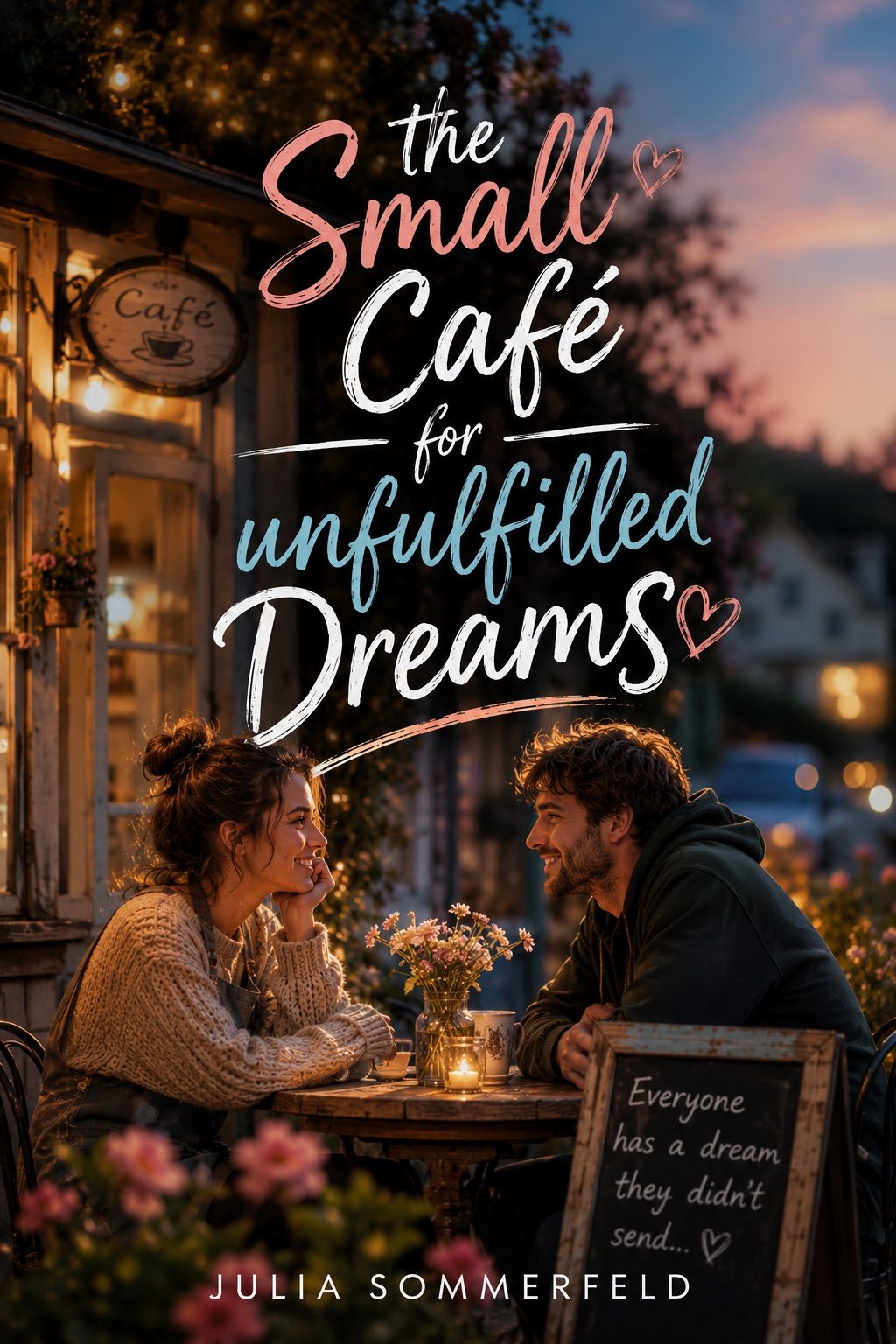
The Café of Unsent Dreams
- Romantasy
No signup, no paywall · the full story continues in the app
The story
At twenty-nine, Liv finds a box of over three hundred letters, all beginning: “If I were braver, I would…”—and none were ever mailed. Liv is a planner who suddenly stops managing her life; Jonas is a man who refuses to plan his feelings—yet he’s careful with other people’s hearts. A warm, hopeful small-town romance where everyday courage changes lives, one letter at a time, with a feeling of being seen and understood.
Chapter 1 · A Box With Over Three Hundred Starts · 10 min read
The small-town library back room smelled like dust and old glue, the kind that made Liv’s nose itch when she bent too fast. A cardboard box waited on the worktable beside the ladder, taped up with brown tape that had gone soft at the edges. “Attic cleanup results,” Mara had called it this morning, like it was a joke and not a job.
Liv peeled the tape carefully, because she always did. Her fingertips already had ink smudges from handling the last batch of donation papers. She liked to think she was keeping things safe, contained, respectful. She pulled the lid back and found layers of tissue paper, then the corner of thicker cardboard inside, like someone had tried to hide what they couldn’t throw away.
More cardboard. More tissue. Then a stack of envelopes, about as many as she could count without getting dizzy—two hundred, maybe three. The paper looked yellowed, but not rotten. Someone had pressed it flat with patience.
Liv lifted the top envelope. There was no sender line. No date. The only thing that stood out was the start of the handwriting, dark ink that had soaked in instead of sitting on top: “If I were braver, I would…”
Her throat tightened. She had read enough letters in her job to know when a person was trying to be polite and when they were trying to be brave. These were not polite. These were the words people used when they ran out of time.
Liv slid a finger under the flap and opened it. Before she even reached the first sentence, she noticed a tiny pressed flower stuck to the inside of the paper, violet-like in shape but dried dark, almost black at the center. It looked old enough to have traveled through years without being mailed.
She unfolded the letter slowly. “If I were braver, I would tell you I miss my sister.”
Liv stopped breathing for a second. The words were simple. They didn’t ask for answers. They just sat there, heavy and private. She kept reading anyway, like she could hold the pain without letting it spill.
“I kept her last scarf in the back of my closet. I touch it when the house is too quiet.” The letter described a kitchen table, a smell of soap, and a sister’s laugh that had become a memory people used to measure time. “I practiced saying it out loud. I practiced and practiced.”
At the last line, the ink got lighter, like the writer’s hand had finally shook. “If I were braver, I would not wait for courage to arrive like a letter. I would send my own.”
Liv swallowed. The back room suddenly felt too small for the weight of it. She could almost hear the person folding the paper, sealing it, and then stopping. Not because the words were wrong. Because the courage ran out at the last second.
She re-read the start phrase—“If I were braver, I would…”—and realized every envelope in the box probably carried the same dare. A whole stack of people who had wanted to say something and failed to send it.
Liv looked at the pressed flower again. She imagined a hand slipping it onto the paper as if it could hold the feeling in place. She imagined a person in a kitchen, tying their own bravery into something small and breakable.
A soft knock sounded at the door. “Liv?” Mara’s voice came through. “You alive in there? We’ve got three more boxes from the post office attic and Hugo says the ceiling mold is worse than last time.”
Liv quickly slid the letter back into the envelope and set it on top of the pile. “I’m here,” she called, too bright. “Tell Hugo I’ll suit up. And… can you bring gloves next time? These older papers—”
She stopped herself. She didn’t want to explain how the paper felt like a heartbeat. Mara would just laugh and say it was “paper drama,” the kind of joke that made Liv’s chest hurt less.
Mara pushed the door open with her shoulder and her bright knit hat. “There you are. You look like you’ve seen a ghost.” Her eyes flicked to the opened box. “Oh. That’s… a lot.”
Liv forced her smile. “It’s library material. Probably.” She pointed at a corner of the table where she had already cleared space for careful sorting. “We log it, we store it, we—”
Mara leaned in closer, then paused. “That handwriting is the same on the top one.” She looked at Liv with a serious face for half a second. “Is it? Like… the same start phrase?”
Liv nodded. “Yes.” She didn’t add that she had read one and felt it hit her in the gut. “No sender. No date.”
Mara exhaled, slow. “So they never got sent.” Her voice softened. “That’s sad, Liv.”
Liv picked up the top envelope again, then stopped herself. She could put the box away. She could wait until Hugo came back and they followed the right rules. She could pretend the letters were just objects.
Liv’s hands moved before her brain could stop them. “I’ll read just the first line of the next one,” she said, like that made it safer. “Then we can log them.”
Mara watched her for a moment, then nodded once, like she accepted that Liv needed a taste before she could do the work. “Fine. But don’t disappear in there.”
Liv opened the second envelope. Same start phrase. Same pressed flower detail, but this one had a different shade, almost bluish at the edges. The ink looked like it had been written in a hurry and then corrected with anger.
She read the line that made her stop. “If I were braver, I would tell Jonas I’m sorry for pretending I don’t notice him.”
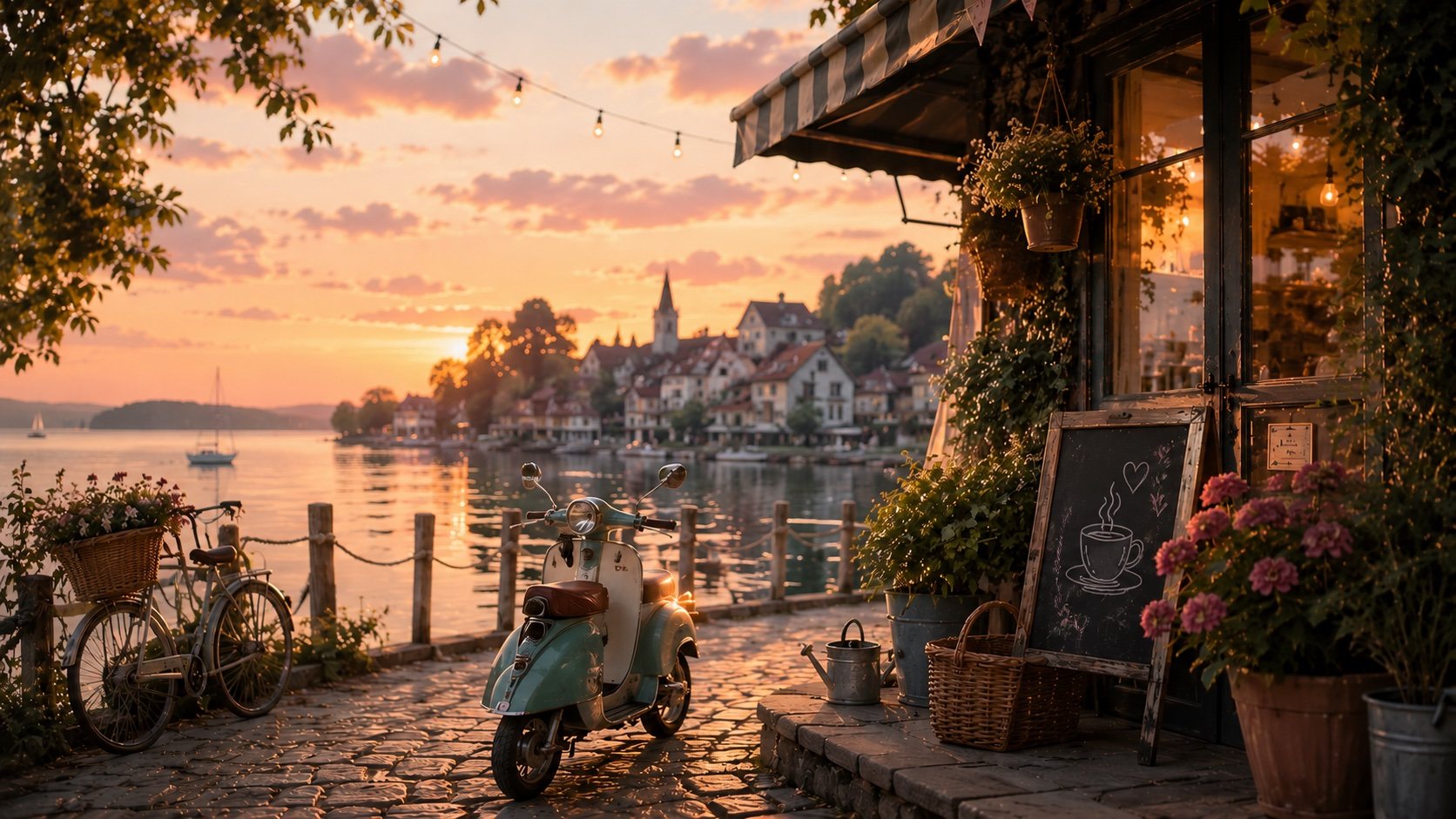
Jonas Berg owned the café on Main Street, where Liv went when she needed coffee that tasted like she could start over. He was careful with people. He was also careful with himself, like he kept his feelings in a locked drawer and handed out keys only when he decided it was safe.
Liv lowered the letter slowly. Her mind started building scenes without permission. Jonas at the café counter, sleeves rolled up, a clean apron, his dark eyes scanning the room like he was taking photographs in his head. Jonas speaking in that calm voice of his, like he could be kind and still be firm.
She felt drawn to him and annoyed with herself for it. Drawn to the way he seemed to notice when people tried to hide. Determined not to need him. She had built her life around not needing anyone to save her from her own hesitation.
Mara’s eyebrows rose. “You’re pale.”
Liv looked down at the paper again, then forced her voice steady. “It mentions someone named Jonas.” She didn’t say more. She didn’t want to turn it into a story about her. Not yet.
Mara leaned back, arms folded. “In town, that’s not a common name.” Her tone was teasing, but her eyes were not. “Maybe it’s just coincidence.”
Liv stared at the envelope until the letters blurred. She could almost feel the person on the other end of the words, choosing silence, choosing safety. “No date,” she said. “No sender. How does someone even… keep this?”
Mara reached for a box of gloves by the door and handed them to Liv. “You keep it the way people keep regrets. You don’t talk about it. You just… store it.”
Liv pulled on the gloves, then took the second envelope and placed it carefully back in the stack. The act felt like putting a lid on a boiling pot. Her curiosity fought the urge to obey the rules.
“I’ll keep reading,” Liv said. The decision came out quiet, but firm. “Not while we’re logging. Later. I want to understand what these people wanted to say.”
Mara’s mouth twitched. “You and your big heart,” she said. “Just—if you get emotional, call me.”
Liv nodded. “I won’t.” Then, after Mara left to check the next boxes, she sat alone in the back room and let herself feel the gut-punch again. These were real people. They never sent the courage.
She pulled the first envelope back out and smoothed it flat. The pressed flower sat there like a tiny, dead violet that refused to disappear. Liv traced the edges with one gloved finger and whispered the start phrase under her breath, like a dare she was afraid to accept.
When she went to close the box, she noticed something she hadn’t seen before—an envelope tucked at the bottom, thinner than the rest. It wasn’t sealed with tape. It had a stamp in the corner, but the ink looked wrong, as if it had been printed from a different era.
Liv turned it over. The front side had no sender and no date. The address line was blank at first glance, until the light hit it and the handwriting showed through faintly, like it had been pressed too hard into the paper.
Her own name was there. Not her full name, just “Liv,” in the same dark ink. And the stamp mark didn’t match any current post office imprint in town.